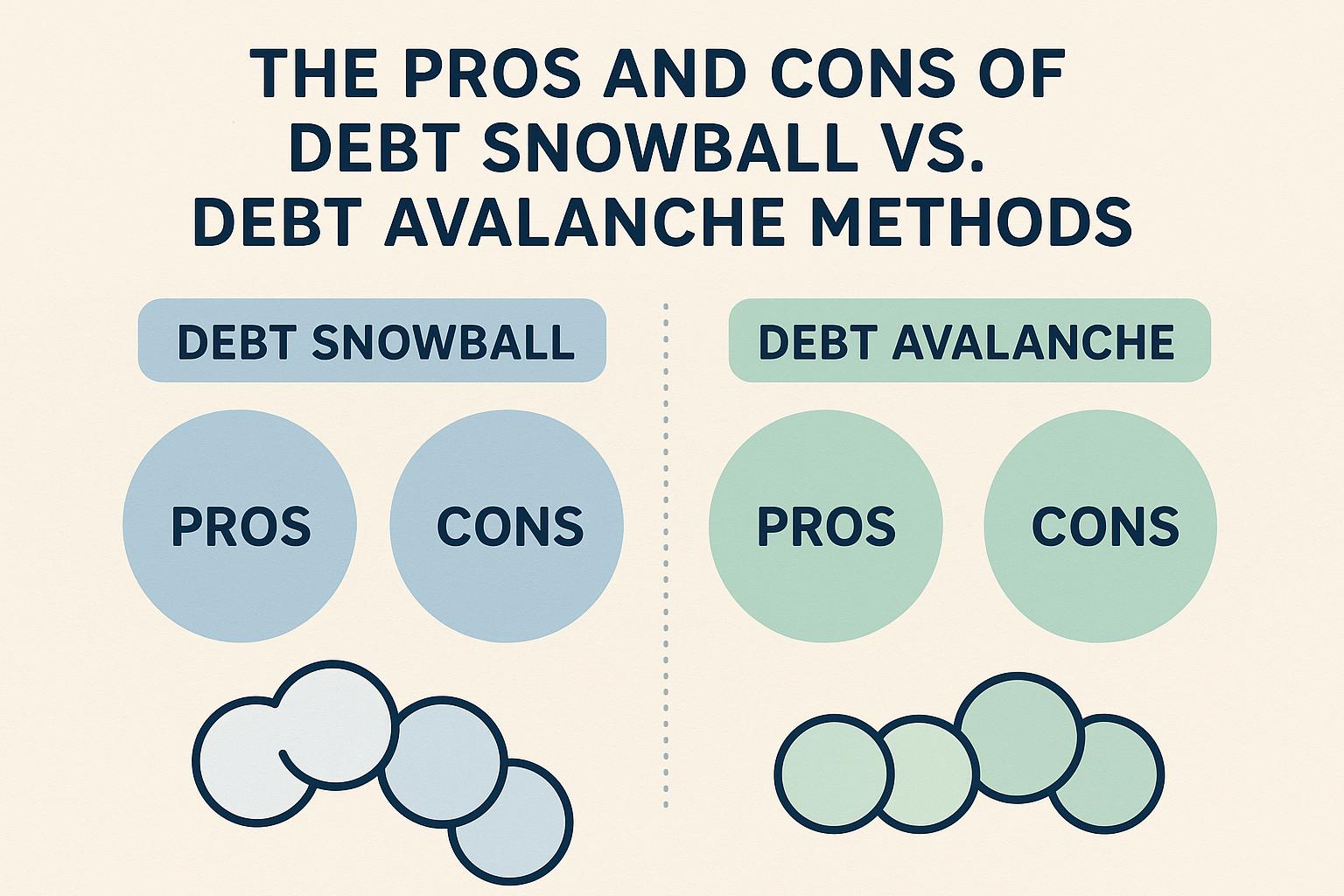
The Pros and Cons of Debt Snowball vs. Debt Avalanche Methods
When individuals face the challenge of paying down debt, the decision of how to do so effectively is crucial. This decision influences how quickly they can regain financial independence and how much it will cost them in the process. Among numerous strategies available to achieve debt freedom, two popular methods stand out: the Debt Snowball and Debt Avalanche methods. Each has unique characteristics, with various pros and cons that appeal to different personal preferences and financial predicaments.
Debt Snowball Method
The Debt Snowball method is a debt-reduction strategy where the debtor concentrates on paying off the smallest debts first, disregarding the interest rates attached to each. The tactic operates by making minimum required payments on all debts, while any extra money is allocated to the smallest debt until it is fully paid. After eliminating the smallest debt, the payment previously allocated to it ‘rolls over’ to the next smallest debt. This creates a snowball effect, gradually increasing the amount paid towards each subsequent debt.
Pros of the Debt Snowball Method
Psychological Motivation: One of the primary benefits of the Debt Snowball method is its ability to provide strong psychological encouragement. Paying off debts, no matter how small, delivers a sense of achievement. This accomplishment can be incredibly motivating, spurring individuals on to continue with their repayment journey. Many people find that seeing tangible progress quickly enhances their commitment and drive, making the challenging task of becoming debt-free seem attainable.
Simplicity: The Debt Snowball approach is particularly praised for its simplicity. It does not demand intricate calculations or an in-depth understanding of interest rates, making it accessible to individuals who are less comfortable with detailed financial strategies. This straightforward process allows users to focus on one debt at a time without the confusion of continuously evaluating interest-related priorities.
Cons of the Debt Snowball Method
Potential Higher Interest Costs: A significant drawback of this approach is the potential for increased interest payments. By not addressing higher-interest debts first, the overall cost of borrowing might increase. This could lead to paying more in interest over the life of the loans, compared to methods that prioritize interest rates.
Time Consideration: The time frame to reach complete debt elimination could be extended. While smaller debts disappear faster, the delay in tackling larger, higher-interest debts means that interest continues to accumulate. Consequently, the total time to achieve a debt-free status might be longer than anticipated.
Debt Avalanche Method
The Debt Avalanche method takes a different approach, concentrating on debts with the highest interest rates first. This method ensures that, after making the minimum payments on all debts, any additional money is prioritized towards clearing the balance with the highest interest rate. Once that debt is cleared, the payment amount ‘avalanches’ to the next highest interest debt. It’s a strategy that aims to minimize interest payments and reduce overall debt quicker.
Pros of the Debt Avalanche Method
Cost Efficiency: The most notable advantage of the Debt Avalanche method is its cost-effectiveness. By targeting and eliminating high-interest debt early, users can significantly reduce the total interest paid over time. This can save a considerable amount of money as borrowers ensure that their payments are consistently working to lower principal amounts rather than servicing costly interest charges.
Time Efficiency: By focusing on reducing costly debts first, the Debt Avalanche method can potentially lead to a quicker journey towards being debt-free. This is particularly true when the debtor has substantial high-interest balances. The expedited reduction in interest charges allows for a faster clearance of debt over the long term.
Cons of the Debt Avalanche Method
Motivation Risks: One notable drawback is the potential lag in seeing debt-repayment progress. High-interest debts are often also the largest, and it can take considerable time to pay them off entirely. For individuals who require quick wins to maintain enthusiasm and motivation, this could prove discouraging.
Complexity: The Debt Avalanche method necessitates careful financial management, requiring one to not only track various interest rates but also work through precise calculations to determine which debt to address next. For those not well-versed in handling such financial intricacies, this can be a challenging and daunting task. The complexity involved can be a barrier to those not comfortable with exhaustive financial planning.
Choosing the Right Method
The decision between using the Debt Snowball and Debt Avalanche methods involves various factors, primarily revolving around personal preference and financial scenarios. For some individuals, who thrive on instant gratification and the simplicity of their approach, the Debt Snowball method proves to be more appealing. The consistent progress and psychological boosts from paying off smaller debts can fuel ongoing commitment and determination.
On the other hand, individuals who prioritize eventually saving more money and who possess a disciplined and analytical approach might find the Debt Avalanche method more in line with their goals. This method appeals to those who are comfortable with the detailed examination of interest rates and eager to minimize the overall costs associated with their debt.
Ultimately, the journey toward successful debt elimination requires more than just choosing a method. It necessitates consistent effort and dedication, ensuring that whichever path is taken, it aligns effectively with personal objectives and behavioral patterns. Both methods can lead to financial freedom, provided they are implemented with a steady commitment and a clear understanding of one’s financial landscape. Nonetheless, adaptability is essential, and periodically revisiting the chosen strategy may ensure it remains the best fit as financial situations evolve over time.