Understanding Interest and Debt Growth
Interest plays a fundamental role in various financial products, ranging from savings accounts to loans. Understanding how interest works is crucial, particularly when it comes to managing debt, as it can significantly impact your financial health over time.
What is Interest?
In simple terms, interest is the cost of borrowing money. When you take out a loan or use a credit card, you are required to repay the principal amount borrowed plus an additional charge, which is the interest. This charge represents the profit the lender earns for lending you funds, and it can be a fixed or variable rate.
Types of Interest
There are two primary types of interest:
Simple Interest
Simple interest is calculated on the original principal amount throughout the life of the loan or investment. The formula is straightforward: Interest = Principal x Rate x Time. This means that no matter how long the period, the additional cost of borrowing does not increase because the interest is calculated as a constant portion of the principal.
Compound Interest
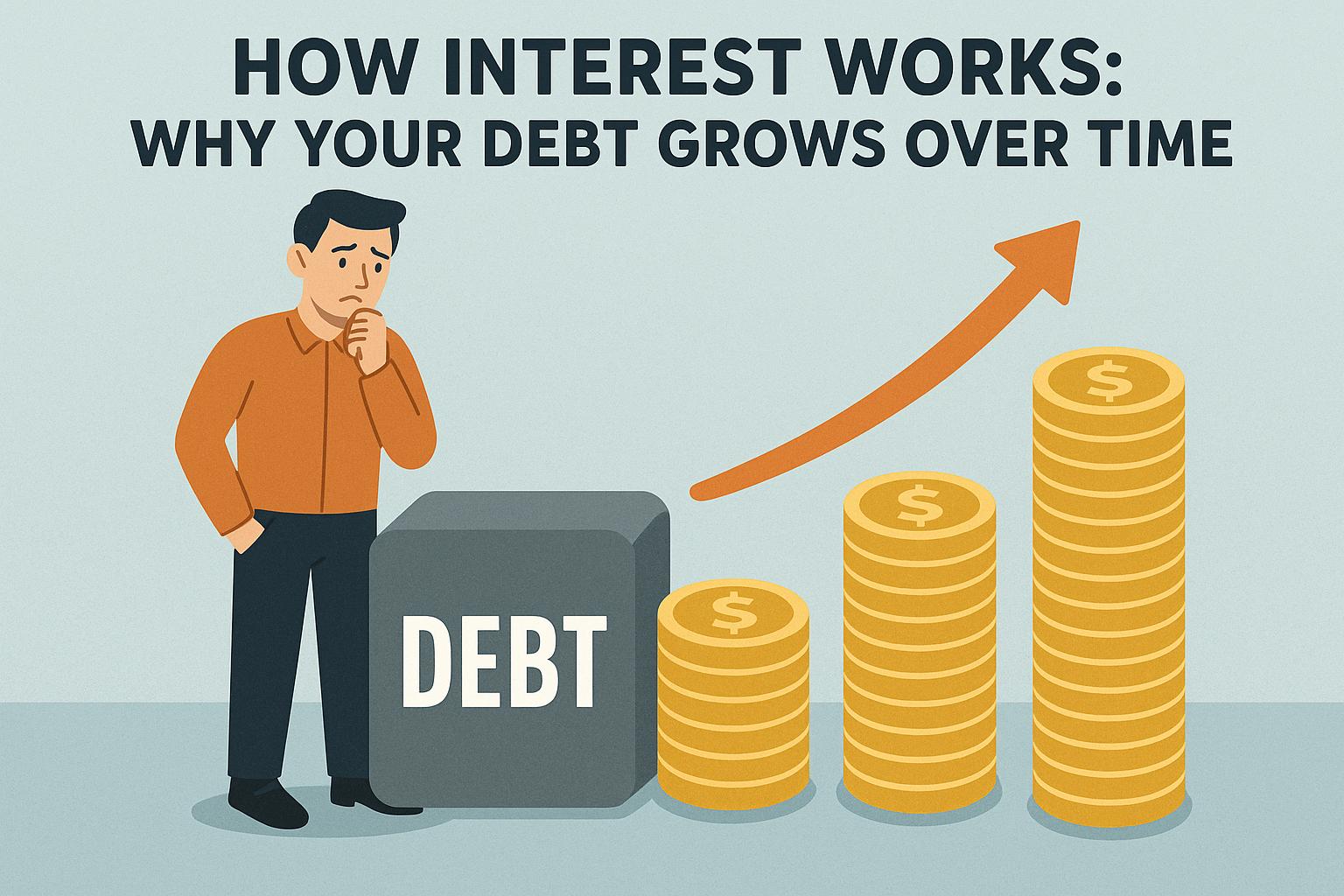
Compound interest, on the other hand, is calculated on the initial principal as well as the accumulated interest from previous periods. This “interest on interest” effect can lead to exponential growth of debt over time. The formula is: Compound Interest = Principal x (1 + Rate)^Time – Principal. With compound interest, the amount you owe or earn grows at a faster rate, which can significantly increase the total amount over long periods.
How Interest Affects Debt
The impact of interest on debt depends on several factors, which highlight the importance of understanding the nuances of your financial commitments. These factors include interest rates, repayment periods, and compounding frequency, all of which play a significant role in determining the total cost of a debt.
1. Interest Rates
The interest rate is a critical determinant of how much you pay over the life of a loan. Higher interest rates mean you will pay more in total, increasing the financial burden on the borrower. For variable-rate loans, the interest rate can change over time, which leads to unpredictability. This fluctuation means the cost of a loan can increase rapidly, forcing borrowers to pay more than they initially anticipated.
2. Repayment Period
The repayment period refers to the duration over which you plan to repay the loan. The longer the period, the more interest accumulation occurs. While extending the repayment period can lead to smaller individual payments, it increases the total amount paid in interest. Borrowers often overlook this factor, focusing instead on the affordability of monthly payments without considering the long-term cost implication.
3. Compounding Frequency
Compounding frequency refers to how often the accumulated interest is added to the principal. The higher the frequency, the faster the debt grows. For example, if interest compounds daily, the balance on a loan increases more rapidly than if it compounds annually, causing the total debt owed to escalate much quicker. Understanding this aspect can help in choosing the most cost-effective loans and investments.
Mitigating Interest Impact
Understanding and managing interest is essential to prevent excessive debt growth and maintain healthy financial standing. Here are some strategies that can help mitigate the adverse effects of interest on debt:
1. Pay More Than the Minimum: One effective way to reduce debt is by paying more than the minimum required on loans or credit card balances. This approach decreases the principal amount, which in turn lowers the amount of interest accumulated over time. It also helps in shorting the loan term, ensuring you get out of debt quicker.
2. Refinance High-Interest Debt: Refinancing involves replacing an existing loan with a new one under more favorable terms, typically lower interest rates. By doing so, you can significantly decrease the overall cost of debt. It is beneficial to explore refinancing options periodically, especially when interest rates drop, to ensure you are not overpaying on existing debt.
3. Prioritize High-Interest Debt: It’s often wise to focus on repaying debts with the highest interest rates first, a strategy known as the avalanche method. This approach minimizes the total interest paid over time, allowing you to become debt-free faster and more efficiently. By targeting high-interest debt, you not only reduce stress but also improve your credit health in the long term.
Long-Term Benefits of Managing Interest Effectively
Effective interest management is critical to achieving financial stability and wealth accumulation. By understanding and controlling the growth of interest-related debt, individuals can leverage their finances positively rather than be burdened by unmanageable obligations. Implementing effective debt management strategies has several advantages:
- Improved Credit Score: Reducing debt and making timely payments enhance your credit profile, allowing access to more financial products at better terms.
- Increased Savings: As less of your income is directed toward interest payments, more can be directed toward savings or investments, building financial security.
- Stress Reduction: Lower debt balances contribute to peace of mind, reducing the pressure and anxiety associated with financial constraints.
- Greater Financial Flexibility: With lower debt service commitments, there are greater opportunities to invest in new ventures, consider career changes, or make significant life changes.
Conclusion
Interest is a powerful financial force that can work for or against you. On one hand, it can help grow savings with time, while on the other, it can make debt burdensome if not managed wisely. By understanding interest dynamics and applying strategic management techniques, individuals can position themselves for long-term financial health.
For more information on debt management strategies, consider exploring resources from financial institutions or credit counseling services, such as this Consumer Financial Protection Bureau. Taking proactive measures to educate yourself financially can lead to more informed decisions, contributing to a more stable financial future. Remember, the goal is to ensure interest works in your favor and not against it.